

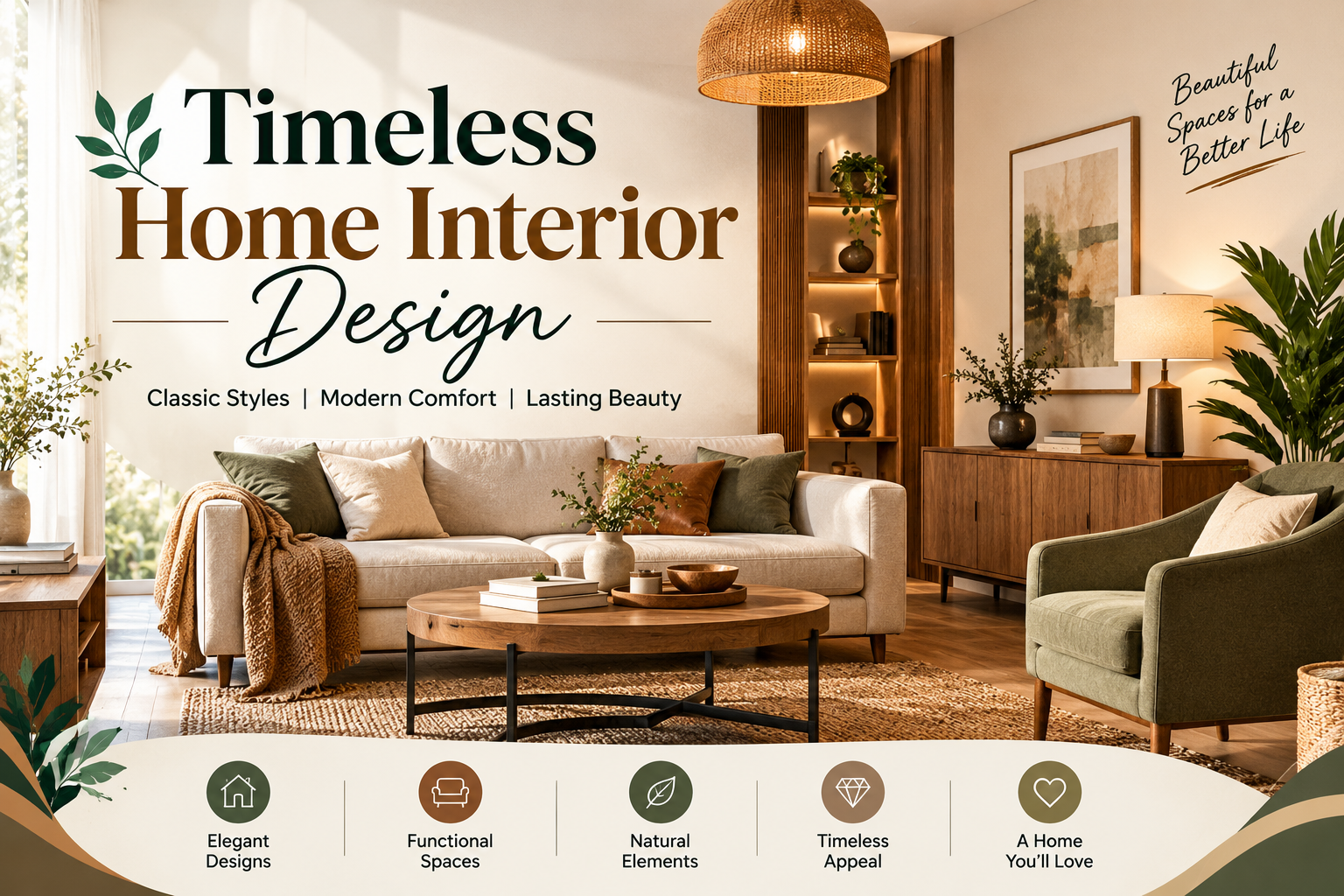
Why Timeless Design Matters for Modern Homes
Home interior trends change frequently, but a comfortable and attractive home does not need a complete makeover every year. Many homeowners are increasingly interested in interiors that combine personal style, practical layouts and materials that remain appealing over time.
Timeless home interior design focuses on choices that can adapt to changing preferences without requiring expensive renovations. Rather than filling every room with the latest trend, the idea is to create a balanced space using durable furniture, suitable colours, useful lighting and thoughtful decoration.
A recent Hindustan Times feature on timeless luxury-home design discusses priorities that go beyond expensive finishes. These ideas can also inspire homeowners working with more modest budgets.
1. Choose Furniture That Can Last for Years
Furniture plays a major role in how a room looks and functions. Instead of purchasing pieces simply because they are fashionable, consider their construction, comfort, maintenance requirements and suitability for your space.
A well-made sofa, a practical dining table and a comfortable bed can remain useful even when other parts of the room change.
Look for timeless furniture with simple shapes and finishes that work with different colour schemes. Neutral upholstery, classic wooden furniture and versatile storage units can be easier to update than highly distinctive pieces.
Before buying large furniture, measure the room, doorways and walking paths. A beautiful item may not be practical if it makes movement difficult or leaves the room feeling crowded.
2. Use Colours That Are Easy to Update
Colour has a significant influence on the mood of an interior. Soft neutrals, warm whites, earthy tones and muted greens can create a calm background for furniture and decoration.
This does not mean every room needs to be beige or white. A timeless interior can also include deeper colours, patterned fabrics and personal artwork.
The important point is to use strong colours intentionally. For example, you might keep walls relatively neutral and introduce colour through cushions, curtains, rugs or decorative objects. These smaller items are usually easier to replace when your preferences change.
For more inspiration, explore Hindustan Times' coverage of 2026 home colour trends.
3. Prioritise Lighting Over Expensive Decoration
Good lighting can improve the appearance and usability of a room without requiring costly decorative finishes.
A practical lighting plan usually combines different types of light:
-
Ambient lighting provides general illumination.
-
Task lighting supports activities such as reading, cooking and working.
-
Accent lighting highlights artwork, architectural features or decorative objects.
In a living room, a ceiling light can provide general illumination while a floor lamp creates a comfortable reading corner. In a kitchen, task lighting can make work surfaces easier to use.
Whenever possible, make use of natural daylight through suitable window treatments and an uncluttered layout. The right combination depends on the room's size, orientation and daily use.
4. Select Materials for Durability and Maintenance
Expensive materials do not automatically create a better interior. A material should suit the way the room is used, how much maintenance it needs and the conditions it will face.
For example, a busy family home may benefit from flooring that is easy to clean and resistant to everyday wear. In kitchens and bathrooms, moisture resistance is particularly important.
Natural wood, stone, ceramic tiles and quality fabrics can all contribute to an attractive home, but each has its own care requirements and limitations.
When choosing materials, consider the total cost of ownership rather than the initial price alone. A cheaper surface that needs frequent replacement may cost more over time.
5. Keep Storage Practical and Discreet
Clutter can make even an expensive room feel uncomfortable. Well-planned storage helps keep everyday items accessible without allowing them to dominate the space.
Consider wardrobes with internal organisers, storage beds, wall-mounted shelves and cabinets that use available vertical space. In smaller homes, furniture that serves more than one purpose may be particularly useful.
However, do not fill every empty corner with storage. Leave enough open space for comfortable movement and visual balance.
Functional home design is about making daily routines easier, not simply hiding belongings behind closed doors.
6. Add Personality Through Art and Accessories
A timeless interior should reflect the people who live in it. Artwork, family photographs, travel souvenirs, books and handcrafted objects can make a home feel personal.
Instead of buying many decorative items at once, select a few pieces that have meaning or work well with the room's overall design.
Plants can also add colour and texture, provided you choose varieties suitable for the available light and your maintenance routine.
Accessories are an easy way to refresh a room without replacing furniture or repainting walls. You can update cushions, table decorations and artwork as your tastes evolve.
7. Make the Layout Fit Your Lifestyle
A well-designed home should work for its occupants. A household that regularly entertains guests may need flexible seating, while someone working from home may benefit from a dedicated desk and good task lighting.
Before redesigning a room, consider how you use it throughout the day. Identify areas where movement feels restricted, storage is insufficient or lighting is uncomfortable.
In smaller homes, avoid oversized furniture that blocks pathways. In larger rooms, create functional zones rather than leaving furniture spread too far apart.
The best home interior design ideas for 2026–2027 are not necessarily the most expensive ones. They are choices that make a home more comfortable, practical and suited to the people living in it.
How to Update Your Home Without Overspending
A full renovation is not always necessary to make an interior feel fresh. Start with small improvements that solve specific problems.
You might replace harsh lighting, rearrange furniture, add curtains that suit the room, repaint a wall or improve storage. Prioritise changes that will have the greatest effect on everyday comfort.
Set a budget before purchasing decorative products and avoid replacing functional items simply because a new trend has appeared. Where possible, repair or reuse furniture that remains in good condition.
Final Thoughts
Timeless home interior design combines durability, comfort, personal style and practical use. By choosing adaptable furniture, thoughtful colours, effective lighting and suitable materials, homeowners can create spaces that continue to work well beyond a single season.
For 2026–2027, focus on improvements that genuinely suit your lifestyle instead of following every passing trend. A well-planned home does not need to be extravagant—it needs to feel comfortable, functional and personal.