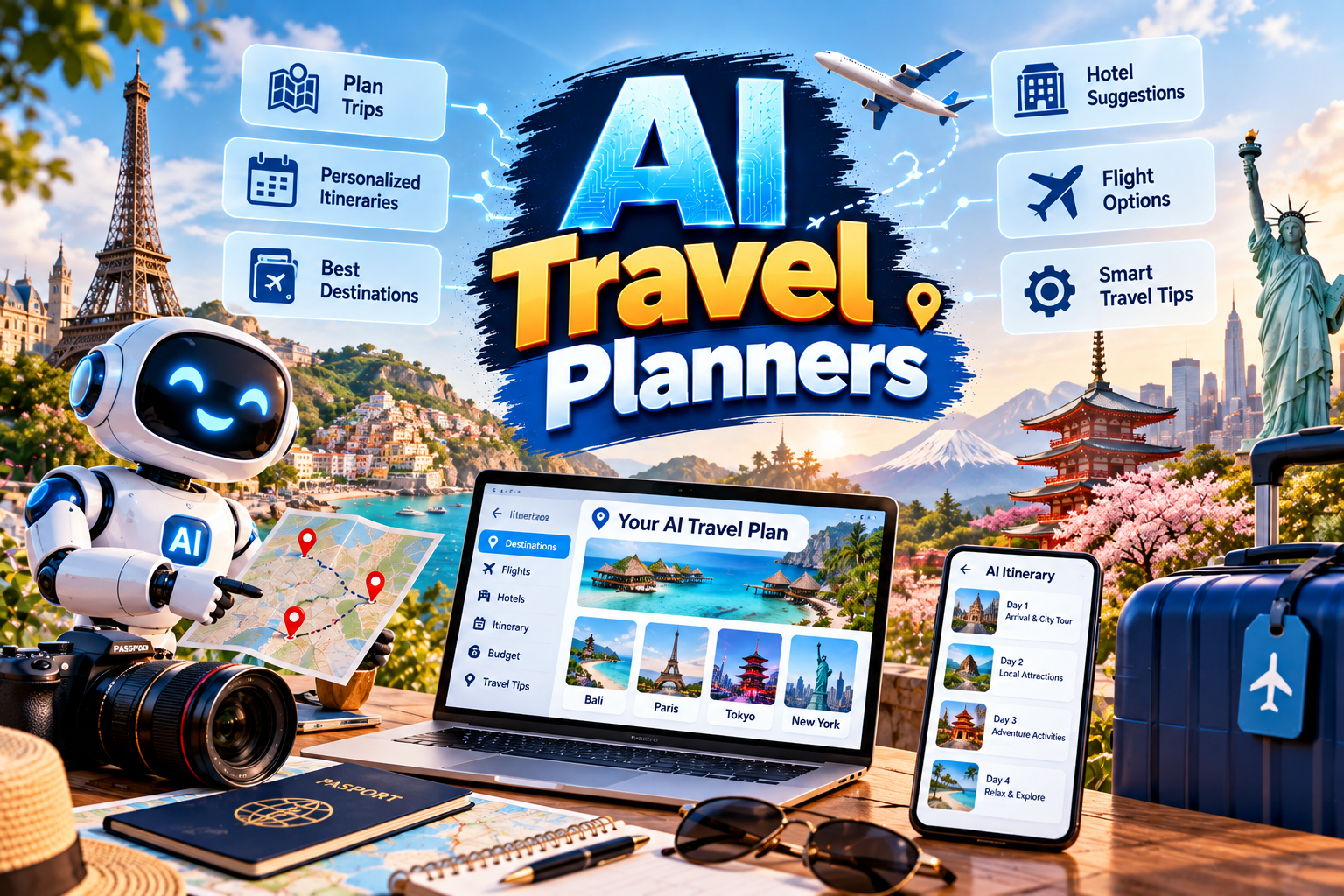

Planning a vacation can be exciting, but organizing transportation, accommodation, attractions, restaurants, and daily activities often requires considerable time.
Travelers traditionally relied on guidebooks, travel agencies, search engines, and recommendations from friends.
In 2026, artificial intelligence offers another approach to organizing trips.
Modern AI travel planners can help travelers explore destinations, prepare itineraries, compare options, and discover activities that match their interests.
Instead of searching through dozens of websites, travelers can describe their preferences and receive structured suggestions within seconds.
However, AI-generated recommendations are not always accurate or current. Understanding both the advantages and limitations of these tools is essential for planning a successful trip.
What Are AI Travel Planners?
AI-powered travel planning systems use artificial intelligence to process travel-related questions and generate recommendations.
Some tools specialize in itinerary creation, while others help users research accommodation, transportation, attractions, or destination information.
These systems may use language models, recommendation algorithms, mapping information, and travel databases.
For example, a traveler might request a five-day itinerary for Japan that includes cultural attractions, affordable restaurants, and family-friendly activities.
An AI system can organize a suggested schedule based on those requirements.
The technology is related to recommender systems, which help users discover relevant options based on preferences and available information.
How AI Trip Planning Works
Traditional travel research often involves switching between multiple websites.
With AI trip planning, travelers can describe their requirements in conversational language.
Useful details include destination, travel dates, group size, budget, preferred activities, and transportation needs.
For example, someone might enter:
"Create a four-day budget itinerary for Paris with museums, local food, and public transportation."
The AI system can then suggest a daily schedule, possible attractions, and general travel advice.
Travelers can refine the itinerary by asking for shorter walking distances, additional cultural experiences, or alternative activities.
This interactive approach makes itinerary preparation more flexible.
Benefits of Using AI Travel Tools
1. Faster Travel Research
One of the biggest advantages of AI travel tools is their ability to organize information quickly.
Instead of manually creating a list of attractions, travelers can request recommendations based on their interests.
This can save time during the early planning stage.
2. Personalized Recommendations
Different travelers have different expectations.
Some prefer luxury hotels and fine dining, while others enjoy backpacking, outdoor adventures, or cultural experiences.
AI systems can adapt suggestions based on the preferences users provide.
3. Better Itinerary Organization
An itinerary should consider travel distances, attraction locations, available time, and rest periods.
AI can help group nearby activities and suggest a practical order for sightseeing.
However, travelers should verify actual travel times and opening hours.
4. Flexible Travel Adjustments
Travel plans sometimes change because of weather, transportation disruptions, or personal preferences.
AI can help travelers reorganize activities and explore alternatives.
This makes it useful during both trip preparation and travel itself.
Can AI Find Cheap Travel Deals?
Many travelers hope AI will help them identify cheap travel deals.
AI can assist by comparing travel options, suggesting flexible dates, and highlighting possible ways to reduce expenses.
However, not every AI chatbot has access to live prices or booking availability.
Some systems may generate outdated estimates or suggest offers that are no longer available.
For reliable results, travelers should verify prices directly through airline websites, accommodation providers, or established booking platforms.
Ways AI Can Help Reduce Travel Costs
AI can suggest traveling during less popular periods, considering alternative airports, or using public transportation.
It may also help compare the overall costs of different destinations.
For example, a traveler considering two European cities could request a sample budget covering accommodation, meals, local transport, and attractions.
These estimates provide a starting point, but actual prices should be confirmed before booking.
Discover Hidden Travel Destinations
Popular tourist attractions often receive most of the attention in travel guides.
However, many travelers prefer quieter places, local neighborhoods, small towns, and lesser-known cultural experiences.
AI can help identify hidden travel destinations by generating suggestions based on specific interests.
For example, someone visiting Italy might ask for peaceful villages, scenic countryside routes, or traditional food experiences outside major tourist areas.
Similarly, travelers exploring India might request recommendations for lesser-known hill towns, heritage locations, or nature destinations.
These suggestions can inspire more distinctive travel experiences.
However, travelers should research transportation, accessibility, safety, and local conditions before visiting unfamiliar places.
Using a Travel Itinerary Generator Effectively
A travel itinerary generator can produce a basic travel schedule within seconds.
To receive more useful results, provide detailed instructions.
Instead of asking for a general trip to Thailand, specify the number of days, budget, preferred destinations, and travel style.
For example, a traveler could request a seven-day Thailand itinerary for two adults that balances beaches, cultural attractions, and affordable accommodation.
After receiving the initial plan, review each day carefully.
Check whether attractions are located close together and whether the schedule includes enough time for transportation and rest.
A good itinerary should be realistic rather than overloaded with activities.
Personalized Travel Planning for Different Travelers
One of the most useful applications of AI is personalized travel planning.
Solo Travelers
AI can suggest walking routes, public transportation options, cultural attractions, and budget-friendly accommodation areas.
Solo travelers should independently verify safety information and local travel advice.
Families
Families can request child-friendly attractions, shorter travel days, suitable accommodation features, and activities for different age groups.
Couples
Couples may prefer scenic locations, relaxing experiences, cultural activities, and memorable dining options.
Adventure Travelers
Adventure enthusiasts can use AI to research hiking destinations, outdoor activities, and possible routes.
However, technical routes, weather conditions, and safety requirements should always be confirmed through reliable local sources.
Limitations of AI Travel Planning
Although AI travel planners can simplify research, they are not perfect.
AI-generated information may contain inaccurate attraction names, outdated prices, incorrect opening hours, or unrealistic travel times.
Some systems may also recommend restaurants or hotels without checking whether they are currently operating.
Travelers should avoid relying entirely on AI for visa requirements, health regulations, transportation schedules, or emergency information.
Official government websites, transport operators, and verified travel providers remain important sources.
Privacy is another consideration.
Avoid sharing unnecessary passport information, payment details, or other sensitive personal data with unfamiliar travel applications.
AI Travel Planning vs Traditional Travel Agencies
Traditional travel agencies can provide human expertise, destination knowledge, and assistance with complex bookings.
AI tools are often faster for brainstorming and generating preliminary itineraries.
Travel agencies may be particularly useful for complicated international trips, group tours, and specialized travel arrangements.
AI can complement these services by helping travelers research possibilities before making reservations.
The most effective approach may combine automated planning with reliable human guidance and direct verification.
Conclusion
Artificial intelligence is making travel research more accessible and convenient.
From generating itineraries to exploring unfamiliar destinations, AI can help travelers organize information and consider options they might otherwise overlook.
However, travelers should always verify important details before making payments or finalizing reservations.
Used responsibly, AI travel planners can become valuable assistants for creating enjoyable, affordable, and well-organized journeys.
The best travel experiences still depend on thoughtful decisions, realistic expectations, and a willingness to explore beyond automated recommendations.