

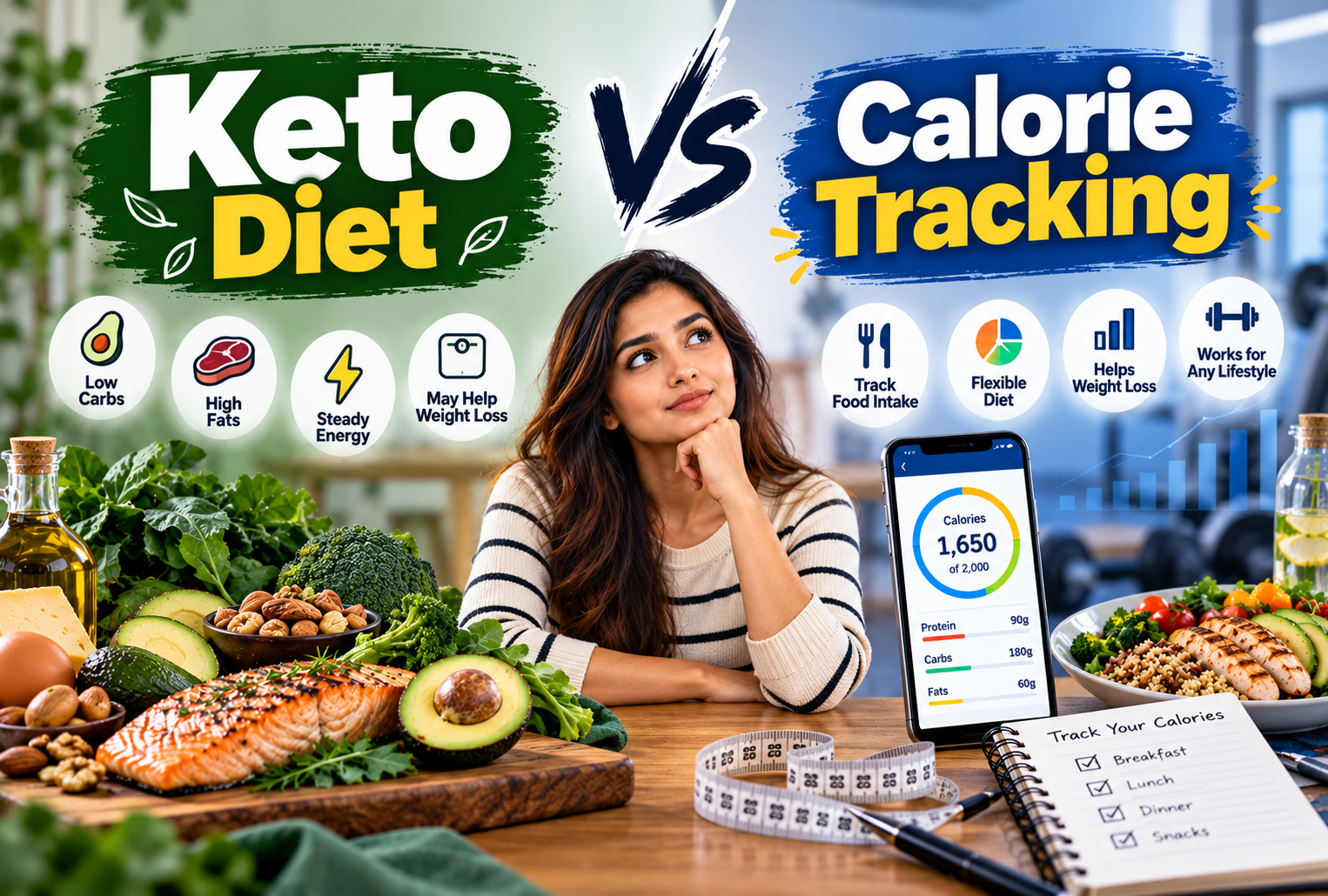
Weight management does not look the same for everyone. Some people prefer a structured diet with clear restrictions, while others want the freedom to enjoy a wider variety of foods and manage their portions.
Two commonly discussed approaches are the ketogenic diet and calorie tracking. Keto focuses on significantly reducing carbohydrate intake, whereas calorie tracking involves monitoring the energy obtained from food and drinks.
Both approaches can help some people make changes to their eating habits. However, the more useful question is not simply which method promises faster results. It is which approach can support balanced nutrition and fit comfortably into everyday life.
For general guidance, the NHS weight-loss resource offers practical information about building healthier habits.
Understanding the Ketogenic Diet
The ketogenic diet is an eating pattern that sharply reduces carbohydrates and includes a relatively high proportion of fat. This can encourage the body to enter ketosis, a metabolic state in which it uses ketones produced from fat as an alternative fuel source.
A typical keto plan may include eggs, fish, meat, selected dairy products, nuts, oils and low-carbohydrate vegetables. Foods such as bread, rice, sugary drinks and many carbohydrate-rich snacks are restricted.
Why Some People Choose Keto
Some individuals appreciate having clear rules about which foods to eat and which to limit. This structure may help them plan meals and reduce certain highly processed snacks.
Initial weight changes can also be noticeable, although early losses may partly reflect changes in the body's stored water rather than fat alone.
What Makes Keto Difficult?
Keto can be challenging for people whose usual meals contain rice, roti, lentils, fruit and other carbohydrate-rich foods. Eating outside the home may also require additional planning.
If poorly planned, the diet may not provide enough fibre or a suitable variety of nutrients. It may also be inappropriate for certain people depending on their health conditions or medications.
Anyone considering a restrictive diet should discuss its suitability with a qualified healthcare professional, especially if they have diabetes or take medication affecting blood glucose.
Understanding Calorie Tracking
Calorie tracking involves estimating the energy supplied by meals, snacks and drinks. It can help people become more aware of portion sizes and the contribution of different foods to their daily intake.
Unlike keto, calorie tracking does not require the complete elimination of carbohydrates. People can often continue eating familiar foods while adjusting quantities and overall meal composition.
How Calorie Tracking Can Help
Keeping a food record may reveal patterns that are easy to overlook, such as frequent sugary drinks, large snack portions or extra calories from cooking oils and sauces.
Tracking can also help people understand how their food choices relate to their goals. However, estimates are not always exact, particularly when meals are homemade or restaurant portions vary.
Common Problems With Calorie Tracking
Recording every meal can take time and may become frustrating for some people. Focusing excessively on numbers can also create unnecessary stress around eating.
Calorie tracking should be a tool for awareness rather than a reason to skip meals, ignore hunger or follow excessively restrictive targets.
People who find tracking stressful may prefer simpler methods, such as regular balanced meals, appropriate portions and greater awareness of eating habits.
Keto vs Calorie Tracking: Which Approach Fits Different Lifestyles?
For People Who Prefer Defined Rules
Keto may appeal to people who prefer a structured eating pattern and are comfortable significantly reducing carbohydrates. However, they still need to plan meals carefully and ensure adequate nutrition.
For People Who Want More Food Choices
Calorie tracking may be easier to adapt to family meals, social occasions and traditional cuisines because it does not automatically exclude an entire food group.
The challenge is maintaining a sensible approach without feeling compelled to measure every ingredient indefinitely.
For People Who Want a Simple Routine
Neither method is compulsory for weight management. Some people may find it more practical to focus on balanced meals, appropriate portions, regular physical activity and consistent sleep.
The CDC's healthy-weight guidance provides additional information about sustainable weight management.
Five Ways to Build More Sustainable Eating Habits
1. Include a Variety of Foods
Aim for meals that include vegetables, appropriate protein sources, fibre-rich foods and suitable fats. Variety can help make a diet more satisfying and nutritionally balanced.
2. Pay Attention to Portion Sizes
Large portions can increase energy intake even when foods are nutritious. Start by understanding your usual portions and make gradual adjustments where appropriate.
3. Choose an Activity You Can Maintain
Walking, cycling, swimming or strength exercises can support general health. Choose activities that fit your ability and schedule rather than relying on an unrealistic exercise routine.
4. Plan Meals Around Your Daily Routine
A practical meal plan should reflect your working hours, budget, cooking facilities and food preferences. Simple meals that are easy to prepare may be more sustainable than complicated diet recipes.
5. Measure Progress Sensibly
Weight is only one measure of progress. Energy levels, physical fitness, sleep, eating habits and other health indicators may also be useful.
Avoid judging an entire plan by a few days of changes. Sustainable habits generally require time and consistency.
Is One Method Better Than the Other?
There is no single answer that applies to everyone. Keto changes the balance of macronutrients, while calorie tracking focuses on overall energy intake. Either approach may be unsuitable if it becomes excessively restrictive or difficult to maintain.
The right choice depends on personal preferences, nutritional needs, health circumstances and the ability to follow the plan without unnecessary stress.
A qualified dietitian or healthcare professional can help people with specific medical needs choose an appropriate approach.
Conclusion
The keto diet and calorie tracking offer two different ways to approach weight management. Keto places strict limits on carbohydrates, while calorie tracking offers more flexibility but requires attention to portions and food intake.
Neither approach guarantees long-term success. A balanced, realistic routine that supports adequate nutrition and can be maintained over time is more useful than following a popular diet without considering personal needs.
Before making major dietary changes, seek professional advice if you have an underlying health condition, take regular medication or are unsure whether a restrictive eating plan is appropriate for you.