

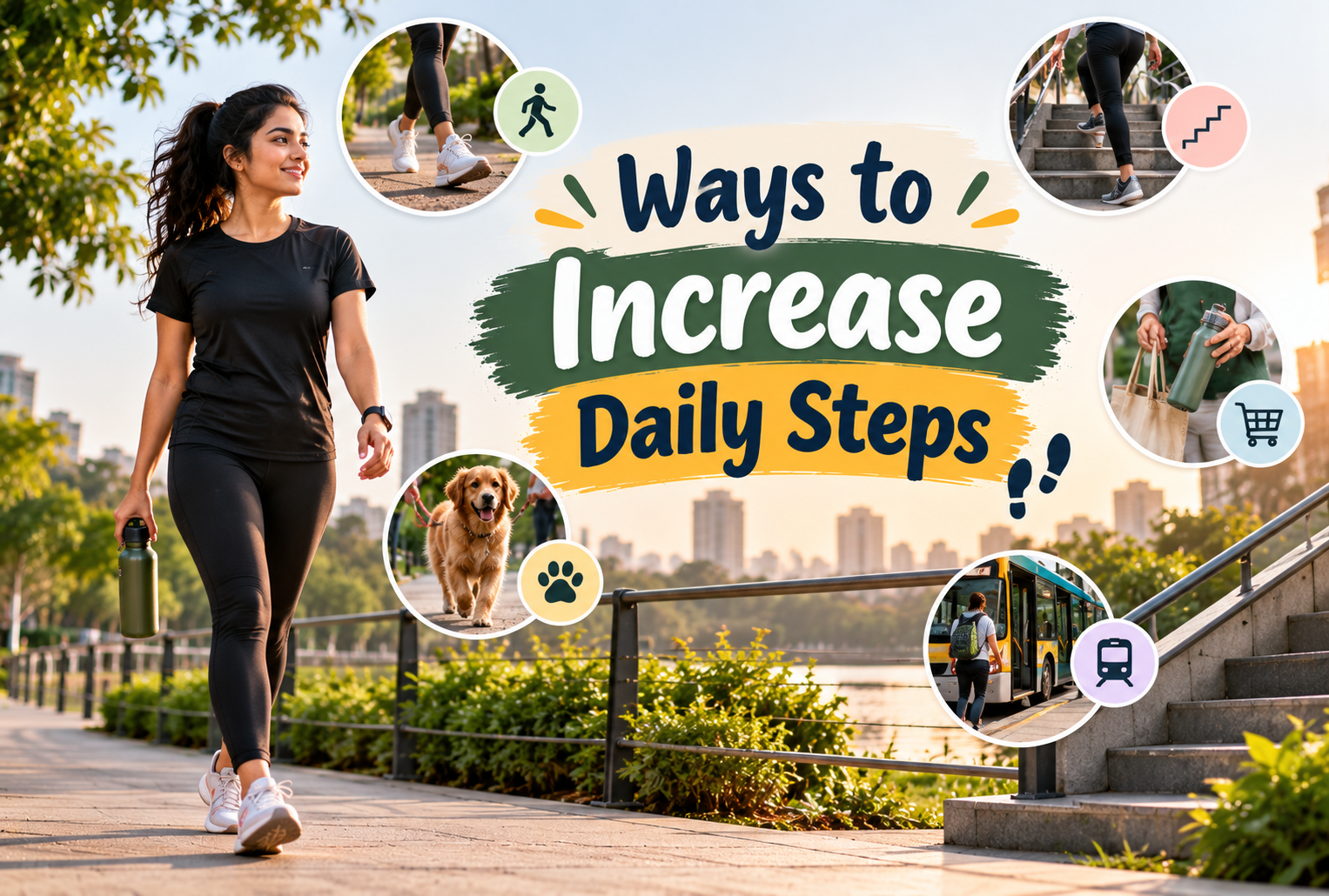
Staying active is important for maintaining a healthy lifestyle, but finding time for exercise can be difficult. Between office work, household responsibilities, family commitments, and daily travel, many people struggle to fit regular workouts into their schedules.
The good news is that you do not always need a gym membership or a separate workout session to move more throughout the day. Small changes in your daily routine can help you walk more and gradually improve your activity level.
There are several simple ways to increase daily steps without changing your entire schedule. Walking while talking on the phone, taking the stairs, moving around during work breaks, and doing household activities are easy ways to add more movement to your day.
Whether you are a student, working professional, homemaker, or someone who spends long hours sitting, these habits can help you stay active.
In this article, we will explore 15 practical ways to increase your daily steps without spending extra time on workouts.
Why Increasing Your Daily Steps Is Important
Walking is one of the easiest forms of physical activity. It does not require expensive equipment, special training, or a gym membership.
Adding more steps to your daily routine can support your overall health and help reduce the amount of time you spend sitting.
Some important benefits of walking regularly include:
-
Supports Heart Health: Regular walking can help improve cardiovascular fitness.
-
Helps Manage Weight: Walking increases daily energy expenditure and can support weight management.
-
Improves Mood: Physical activity can help reduce stress and improve mental well-being.
-
Supports Muscle and Joint Health: Walking helps maintain mobility and lower-body strength.
-
Improves Stamina: Consistent movement can make everyday physical activities feel easier.
-
Reduces Sitting Time: Short walking breaks can help interrupt long periods of inactivity.
You do not need to reach a perfect step count immediately. Even small increases in daily movement can be beneficial, especially if you currently spend most of your day sitting.
1. Walk While Talking on the Phone
One of the easiest ways to increase daily steps is to walk while talking on the phone.
Many people spend several minutes every day making personal calls or attending work-related conversations. Instead of sitting throughout these calls, try walking around your room, office, balcony, or another safe area.
For example, if you spend 15–20 minutes talking on the phone, you may be able to add hundreds or even more than a thousand steps, depending on your walking pace.
How to Make This a Habit
-
Walk during personal phone calls.
-
Use headphones for hands-free conversations.
-
Move around during audio-only meetings when appropriate.
-
Choose a safe, quiet walking area.
-
Avoid walking in traffic or other distracting environments.
Simple Tip: Whenever your phone rings, consider whether you can comfortably take the call while walking.
2. Take the Stairs Instead of the Lift
Using stairs is a practical way to add more movement to your daily routine.
If you live or work in a building with multiple floors, try taking the stairs for short distances instead of using the lift every time.
Climbing stairs also requires more effort than walking on a flat surface, making it a useful activity for improving lower-body strength and cardiovascular fitness.
Easy Ways to Start
-
Take the stairs for one or two floors.
-
Use the lift for higher floors if needed.
-
Increase the number of floors gradually.
-
Walk at a comfortable pace.
-
Use handrails for safety.
Important Tip: If you have knee pain, balance problems, or other mobility limitations, choose a safer alternative that suits your abilities.
3. Park Your Vehicle a Little Farther Away
If you travel by car or two-wheeler, parking slightly farther from your destination can help you walk more.
Instead of searching for the closest parking space, choose a safe and convenient location that requires a short walk.
This simple habit can add extra steps during office visits, shopping trips, and daily errands.
For example, walking an additional five minutes from your parking space to your destination can increase your daily activity without requiring a separate exercise session.
Where You Can Try This
-
Office parking areas
-
Shopping malls
-
Supermarkets
-
Parks and public spaces
-
Other places you visit regularly
Simple Tip: Choose a safe, well-lit parking area and avoid unnecessary walking in extreme heat or unsafe surroundings.
4. Walk During Short Work Breaks
Many office workers spend six to eight hours or more sitting at a desk.
Long periods of sitting can reduce your daily movement, even if you exercise occasionally.
Taking short walking breaks is one of the best walking tips for office workers who want to stay active during working hours.
Instead of sitting continuously, stand up and walk for a few minutes whenever your schedule allows.
Simple Office Walking Ideas
-
Walk to refill your water bottle.
-
Visit a colleague's desk when appropriate.
-
Walk around during scheduled breaks.
-
Take a short walk after completing a task.
-
Use a restroom that is slightly farther away, if convenient.
Even two or three minutes of walking at regular intervals can help increase your total daily steps.
5. Walk While Listening to Music or Podcasts
Listening to music, audiobooks, or podcasts can make walking more enjoyable.
If you already spend time listening to your favourite content, try doing it while walking instead of sitting.
You can walk around your home, terrace, garden, or nearby safe walking area.
This is one of the easiest everyday movement ideas because it combines entertainment with physical activity.
Make Walking More Enjoyable
-
Create a playlist of your favourite songs.
-
Listen to educational podcasts.
-
Enjoy audiobooks while walking.
-
Choose comfortable footwear.
-
Walk at a pace that feels natural.
Simple Tip: Turn a regular listening session into a walking habit whenever your surroundings allow it.
6. Walk While Doing Household Chores
Household activities provide several opportunities to increase daily movement.
Cleaning, organising, putting away clothes, and completing small tasks around the house can involve walking from one room to another.
Instead of trying to finish every task while sitting, look for natural opportunities to move.
Household Activities That Add Steps
-
Sweeping and mopping floors
-
Putting laundry away
-
Organising cupboards
-
Watering plants
-
Cleaning different rooms
-
Carrying lightweight items to their proper places
These activities may not feel like exercise, but they can contribute to your overall physical activity.
Healthy Tip: Focus on completing household tasks comfortably rather than deliberately making them unnecessarily difficult.
7. Get Off Public Transport One Stop Earlier
If you travel by bus or metro, getting off one stop earlier can help you add more walking to your commute.
This is a practical option for people who want to increase daily steps without exercise or a separate workout.
However, the distance between stops can vary significantly, so choose a route that is safe and manageable.
For example, you could get off at a nearby bus stop and walk the remaining distance to your office or home.
Things to Remember
-
Choose a safe pedestrian route.
-
Avoid isolated or poorly lit areas.
-
Consider weather conditions.
-
Wear comfortable shoes.
-
Start with shorter distances.
Simple Tip: Try this once or twice a week before making it part of your regular commute.
8. Take a Short Walk After Meals
Walking after meals is a simple habit that can help you move more throughout the day.
Instead of sitting immediately after breakfast, lunch, or dinner, consider walking for a few minutes.
A gentle post-meal walk may also help improve post-meal blood sugar control, especially when practised regularly.
You do not need to walk quickly or cover a long distance.
How to Include Post-Meal Walking
-
Walk around your home after breakfast.
-
Take a short office walk after lunch.
-
Enjoy a relaxed evening walk after dinner.
-
Walk with family members.
-
Keep the pace comfortable.
Simple Tip: Start with five minutes after one meal and gradually increase the duration if it feels comfortable.
9. Use a Step Counter to Track Your Progress
Tracking your steps can help you understand how much you move during a normal day.
Most smartphones and fitness bands include step-counting features that estimate your daily walking activity.
A step counter can help you set realistic goals and identify opportunities to become more active.
Benefits of Tracking Daily Steps
-
Helps you understand your current activity level.
-
Makes it easier to set personal walking goals.
-
Encourages consistency.
-
Allows you to monitor progress over time.
-
Helps identify less active days.
For example, if you currently average 3,000 steps per day, you might aim for 3,500 or 4,000 steps before gradually increasing further.
Healthy Tip: Treat step counts as estimates rather than exact measurements. Different devices may record slightly different numbers.
10. Walk Around While Waiting
We spend several minutes every day waiting for different things.
Whether you are waiting for food to cook, a phone call to connect, or a family member to get ready, these moments can become opportunities for movement.
Instead of sitting and scrolling through your phone, try walking around a safe area.
Everyday Waiting Moments
-
Waiting for tea or coffee to brew
-
Waiting for laundry to finish
-
Waiting for someone to get ready
-
Waiting during a short work break
-
Waiting for a delivery or appointment
These small walking opportunities may add up over the course of a day.
Simple Tip: When you notice yourself waiting without needing to stay in one place, consider taking a few steps.
11. Choose Walking for Nearby Errands
Not every short journey requires a vehicle.
If a grocery store, pharmacy, or local shop is within a comfortable walking distance, consider walking instead of driving.
This habit can help you stay active while completing your regular responsibilities.
Short Trips You Can Make on Foot
-
Buying vegetables or groceries
-
Visiting a nearby shop
-
Collecting small household items
-
Walking to a local café
-
Visiting a nearby friend or relative
Walking for short errands can also reduce unnecessary fuel consumption.
Simple Tip: Carry a lightweight reusable bag and avoid walking with heavy loads that could cause discomfort.
12. Make Walking Part of Your Social Time
Spending time with friends and family does not always have to involve sitting at home or visiting a restaurant.
You can make walking part of your social routine by inviting someone for a relaxed stroll.
This is a simple way to stay active while enjoying conversations and spending quality time together.
Social Walking Ideas
-
Walk with your partner after dinner.
-
Take a stroll with family members.
-
Meet a friend at a nearby park.
-
Walk with your children in a safe open area.
-
Join a local walking group.
Walking with others can make the activity more enjoyable and help you stay consistent.
Healthy Tip: Choose a pace that is comfortable for everyone in the group.
13. Walk During Television Breaks
Watching television is a common way to relax after a busy day.
However, spending several hours sitting in front of a screen can reduce your overall daily activity.
One simple way to increase movement is to walk around your home during natural breaks in your viewing.
Easy Ways to Add Movement
-
Walk during advertisement breaks.
-
Stand up between episodes.
-
Move around while deciding what to watch.
-
Take a short walking break after a long viewing session.
-
Walk in place if you have limited space.
You do not need to stop watching your favourite shows. Simply add small movement breaks whenever possible.
14. Keep Frequently Used Items Slightly Farther Away
Your home and office setup can influence how much you move during the day.
If everything you need is within arm's reach, you may spend long periods sitting without moving.
Keeping certain frequently used items in convenient but slightly farther locations can encourage natural movement.
Simple Examples
-
Keep your water bottle at a nearby refill station.
-
Place commonly used files on an accessible shelf.
-
Walk to collect printed documents.
-
Stand up to organise your workspace.
-
Move around when completing small office tasks.
The goal is not to make daily activities inconvenient. It is to create small opportunities for movement without interrupting your routine.
Simple Tip: Keep important, heavy, or frequently needed safety items easily accessible.
15. Set Small Daily Step Goals
Setting realistic goals is one of the most effective ways to increase daily steps.
Many people immediately aim for 10,000 steps a day, but this target may feel difficult for beginners.
Instead, start by understanding your current daily average and increasing it gradually.
For example, if you currently walk 4,000 steps a day, you could aim for 4,500 steps.
Once that becomes comfortable, increase your goal again.
How to Build a Consistent Walking Habit
-
Track your normal step count for a few days.
-
Set a small and achievable goal.
-
Add walking to activities you already do.
-
Review your progress every week.
-
Increase your target gradually.
-
Focus on consistency rather than perfection.
Healthy Tip: You do not need to reach 10,000 steps every day to benefit from walking. The right goal depends on your health, fitness level, and daily routine.
Quick Comparison of 15 Easy Ways to Increase Daily Steps
Here is a simple overview of the habits you can include in your daily routine.
|
Daily Habit |
When to Try It |
Main Benefit |
|---|---|---|
|
Walk During Phone Calls |
Personal or Work Calls |
Adds Movement |
|
Take the Stairs |
Home or Office |
Builds Activity |
|
Park Farther Away |
Shopping or Office |
Adds Walking Distance |
|
Walk During Work Breaks |
Office Hours |
Reduces Sitting Time |
|
Walk While Listening |
Free Time |
Makes Walking Enjoyable |
|
Do Household Chores |
At Home |
Encourages Daily Movement |
|
Get Off One Stop Earlier |
Daily Commute |
Adds Walking |
|
Walk After Meals |
Breakfast, Lunch or Dinner |
Supports Activity |
|
Track Daily Steps |
Throughout the Day |
Monitors Progress |
|
Walk While Waiting |
Short Waiting Periods |
Uses Spare Moments |
|
Walk for Nearby Errands |
Shopping or Small Tasks |
Reduces Vehicle Use |
|
Social Walking |
Family or Friend Time |
Encourages Consistency |
|
Walk During TV Breaks |
Entertainment Time |
Reduces Inactivity |
|
Move Around for Small Tasks |
Home or Office |
Adds Natural Steps |
|
Set Small Step Goals |
Every Day |
Builds Healthy Habits |
How Many Steps Should You Walk Every Day?
One of the most common questions people ask is how to reach 10,000 steps a day.
While 10,000 steps is a popular fitness target, it is not a universal requirement for good health.
Research suggests that health benefits can begin at lower step counts, especially for people who are currently inactive. The relationship between step count and health also varies with age and other individual factors.
The most important thing is to increase movement gradually and choose a goal that suits your physical abilities.
A Simple Approach for Beginners
If you currently walk fewer than 3,000 steps daily, begin by adding short walking breaks to your routine.
If you already average 4,000–5,000 steps, try increasing your daily total gradually.
People who comfortably walk 7,000–8,000 steps may choose to maintain that level or work toward a higher goal based on their fitness preferences.
Rather than focusing only on a number, pay attention to how regularly you move and how comfortable you feel.
How to Get More Steps at Work
Office workers often find it difficult to stay active because their jobs involve sitting for long periods.
However, a few changes can help increase movement without affecting productivity.
Walk During Suitable Meetings
If you have an audio-only meeting that does not require screen sharing or note-taking, consider walking while listening.
Use Breaks Wisely
Take a short walk during lunch breaks or between tasks.
Move Away from Your Desk
Stand up to refill water, collect documents, or speak with colleagues when appropriate.
Avoid Sitting Continuously
Try to interrupt long sitting periods with brief movement breaks whenever possible.
Walk Before Leaving the Office
If your schedule allows, take a short walk around the office building before heading home.
These walking tips for office workers can help make physical activity a natural part of the working day.
How to Increase Daily Steps Without Feeling Tired
If you are not used to walking regularly, increasing your activity too quickly may cause discomfort.
The best approach is to start slowly and build consistency.
Start with Short Walks
Begin with a few minutes of walking at a time instead of trying to complete a long walk immediately.
Wear Comfortable Footwear
Choose shoes that provide suitable support and fit comfortably.
Stay Hydrated
Drink enough water throughout the day, particularly during hot weather.
Choose Comfortable Walking Times
During hot Indian summers, early morning or evening may be more comfortable for outdoor walking.
Listen to Your Body
If you experience unusual pain, dizziness, chest discomfort, or significant breathlessness, stop and seek appropriate medical advice.
Remember: Walking should support your health, not become a source of unnecessary physical stress.
Common Mistakes to Avoid When Increasing Daily Steps
Many people begin a walking routine with enthusiasm but struggle to maintain it.
Avoiding a few common mistakes can make your routine easier and more sustainable.
Setting Unrealistic Goals
Trying to increase your steps from 2,000 to 10,000 immediately may be difficult.
Choose gradual improvements instead.
Ignoring Rest and Recovery
Walking is generally a low-impact activity, but your body still needs time to adapt when activity increases.
Comparing Your Steps with Others
Everyone has different schedules, fitness levels, and physical abilities.
Focus on your own progress rather than someone else's daily step count.
Walking in Unsafe Conditions
Avoid walking in heavy traffic, poorly lit areas, extreme weather, or unsafe surroundings just to reach a step goal.
Depending Only on Step Counts
Daily steps are useful for tracking movement, but they are not the only measure of fitness.
Strength training, flexibility, balance, sleep, and nutrition are also important parts of a healthy lifestyle.
Simple Daily Routine to Add More Steps
You can increase your daily walking without making major changes to your schedule.
Here is an example of how small activities can add movement throughout the day.
|
Time |
Activity |
Approximate Extra Steps |
|---|---|---|
|
Morning |
Walk Around While Getting Ready |
300 |
|
Before Work |
Walk from a Farther Parking Spot |
400 |
|
Mid-Morning |
Short Office Walking Break |
300 |
|
Lunch |
Walk After Eating |
600 |
|
Afternoon |
Walk During a Phone Call |
500 |
|
Evening |
Walk for a Nearby Errand |
700 |
|
After Dinner |
Short Family Walk |
600 |
|
Total |
Additional Daily Steps |
3,400 |
These are illustrative estimates. Actual steps depend on walking speed, duration, distance, and individual movement patterns.
Even if you follow only a few of these habits, you may notice an improvement in your daily activity level over time.
Conclusion
Staying active does not always require long workouts, expensive equipment, or extra time at the gym. Sometimes, small changes in your daily habits can make a meaningful difference.
These 15 simple ways to increase daily steps show how you can add more walking to activities you already perform. From walking during phone calls and taking the stairs to moving during office breaks and walking after meals, there are plenty of easy opportunities to stay active.
The key is to start with manageable changes and gradually build a routine that fits your lifestyle.
Whether you are a student, office worker, homemaker, or someone trying to become more active, these daily walking tips for busy people can help you reduce sitting time and move more consistently.
You do not have to reach 10,000 steps overnight. Start with a few extra steps today, stay consistent, and focus on building healthy habits that you can maintain in the long term.