

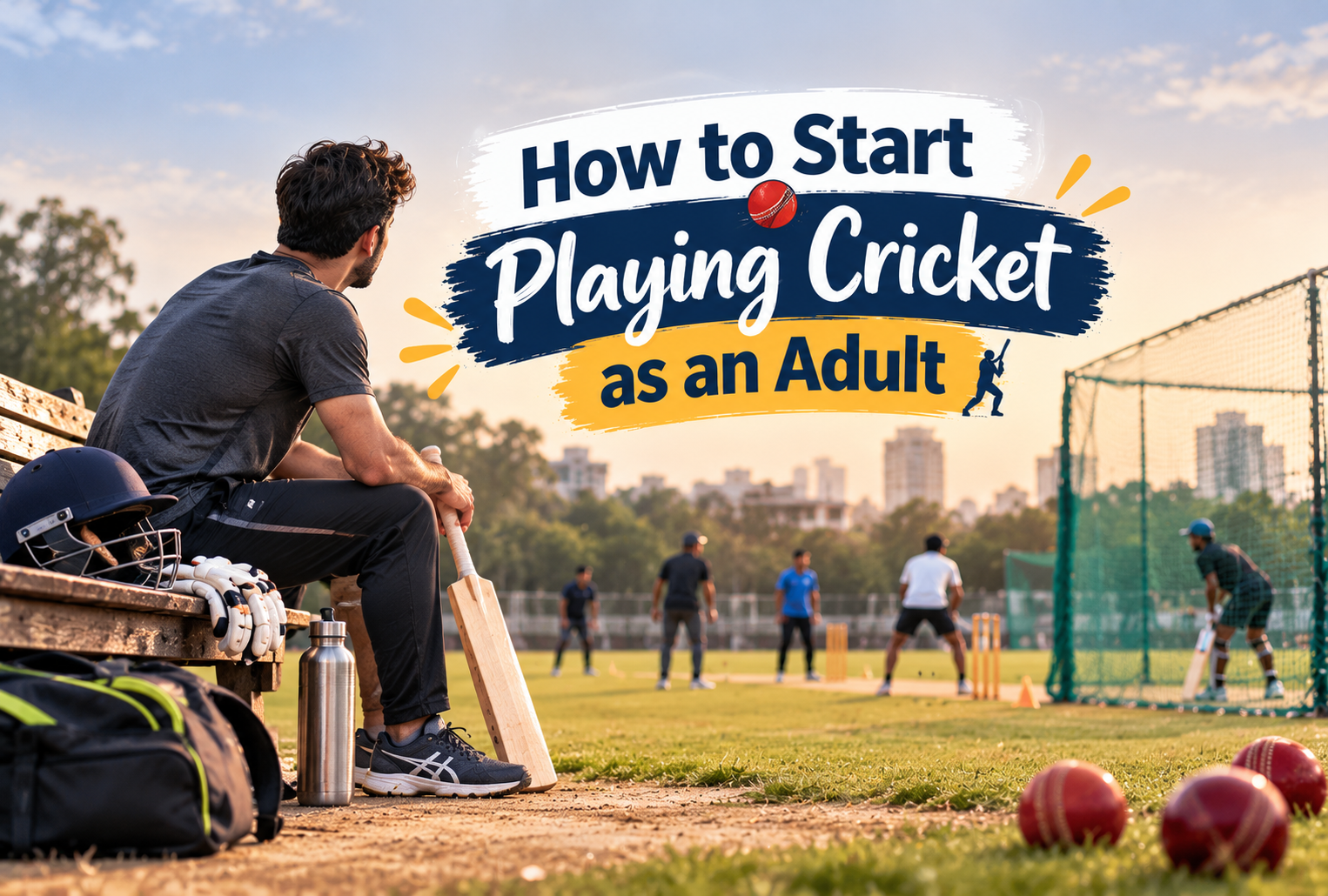
Cricket is a popular sport enjoyed by millions of people around the world. Many people start playing cricket during childhood, but that does not mean adults cannot learn the game. Whether you are in your twenties, thirties, or older, you can start playing cricket with the right guidance, regular practice, and patience.
If you have never held a cricket bat or bowled a ball before, there is no need to feel nervous. You do not need to be a professional athlete to get started. Learning the basic rules, choosing the right equipment, and practising simple skills can help you build confidence over time.
In this guide, you will learn how to start playing cricket as an adult, including the basic rules, batting, bowling, fielding, fitness, equipment, and ways to find a local team.
Can You Start Playing Cricket as an Adult?
Yes, you can start playing cricket as an adult, even if you have never played before. Cricket involves several skills, but beginners can learn them gradually through practice.
The key is to start at your current fitness level and focus on improving one skill at a time. You may initially struggle to hit the ball, bowl accurately, or catch difficult shots. These challenges are a normal part of learning a new sport.
Following practical cricket tips for adult beginners can help you develop good habits, improve your coordination, and enjoy the game without putting unnecessary pressure on yourself.
1. Learn the Basic Rules of Cricket
Before playing your first match, it is helpful to understand the basic rules of cricket. Knowing how runs are scored, how players get out, and how overs work will make the game easier to follow.
How Is Cricket Played?
Cricket is played between two teams, with 11 players on each team in a standard format. One team bats to score runs, while the other team bowls and fields to restrict the scoring and dismiss the batters.
After the teams complete their innings according to the match format, the team with the higher score generally wins.
Important Cricket Terms for Beginners
-
Runs: Points scored by the batting team.
-
Wicket: The three stumps and two bails behind the batter; the term is also used when a batter is dismissed.
-
Over: A set of six legal balls bowled by one bowler, excluding deliveries that do not count as legal balls.
-
Boundary: When the ball reaches the boundary, the batting team scores four runs if it touches the ground before crossing the boundary, or six if it crosses without touching the ground.
-
Bowler: The player who delivers the ball to the batter.
-
Batter: The player who tries to score runs.
-
Fielders: Players who try to stop runs and dismiss batters.
-
Umpire: The official who makes decisions during the match.
How Can a Batter Get Out?
Some common ways a batter can be dismissed include:
-
Bowled: The ball hits the stumps and dislodges a bail.
-
Caught: A fielder catches the ball before it touches the ground.
-
Run out: A batter is out of their ground when the fielding team fairly breaks the relevant wicket while the batter is attempting a run.
-
LBW: The batter is dismissed leg before wicket when the conditions in the cricket laws are met.
-
Stumped: The wicketkeeper breaks the wicket while the batter is out of their ground and is not attempting a run, subject to the relevant rules.
Understanding these basic cricket rules for beginners will help you participate more confidently in practice sessions and friendly matches.
2. Choose the Right Cricket Equipment
You do not need to buy expensive equipment when you begin playing cricket. Start with a few essential items and add more as your skills and playing environment develop.
Essential Cricket Equipment
Cricket bat: Choose a bat that feels comfortable to hold and is suitable for your height, strength, and playing format.
Cricket ball: Beginners can practise with a soft training ball before moving to a hard cricket ball under suitable supervision.
Batting gloves: These protect your hands when facing a cricket ball.
Batting pads: Pads protect your legs from ball impact while batting.
Helmet: A properly fitted cricket helmet is essential when facing hard-ball bowling.
Cricket shoes: Choose shoes with suitable grip and support for the playing surface.
Abdominal guard: This provides additional protection for the groin area during batting and wicketkeeping.
Wicketkeeping gloves: These are useful if you plan to practise as a wicketkeeper.
Should Beginners Buy Professional Equipment?
Not necessarily. If you are starting with tennis-ball cricket, you may need only a bat suitable for that ball, comfortable sportswear, and appropriate footwear.
For hard-ball cricket, protective equipment is much more important. Make sure your helmet, pads, gloves, and other protective items fit properly.
Understanding the right cricket equipment for beginners helps you avoid unnecessary spending while staying comfortable and protected during practice.
3. Learn the Basics of Batting
Batting is one of the most enjoyable parts of cricket, but it requires balance, timing, and concentration. Beginners should focus on controlling the bat before trying to hit powerful shots.
Start With the Correct Batting Stance
Stand with your feet comfortably apart and your knees slightly bent. Keep your body balanced and hold the bat with a relaxed but secure grip.
Your head should remain steady, and your eyes should follow the ball. Avoid standing too stiffly or gripping the bat too tightly.
Practise Basic Batting Shots
Start by learning these common shots:
-
Defensive shot: Used to protect your wicket and control the ball.
-
Straight drive: A shot played along the ground towards the bowler or straight down the ground.
-
Cover drive: A shot played through the cover region.
-
Pull shot: A shot used against a short-pitched ball, usually directed towards the leg side.
-
Cut shot: A shot played against a shorter ball outside the batter's off stump, generally towards the off side.
Do not try to learn every shot at once. Begin with defensive shots and straight drives, then gradually practise other strokes with a suitable coach or experienced player.
Cricket Batting Tips for Beginners
Follow these simple tips to develop better batting technique:
-
Keep your eyes on the ball.
-
Maintain a balanced stance.
-
Move your feet towards the ball when appropriate.
-
Focus on timing instead of hitting with maximum power.
-
Practise with slow, predictable deliveries before facing faster bowling.
These cricket batting tips for beginners can help you build a solid foundation and become more confident at the crease.
4. Learn How to Bowl
Bowling is another important skill that requires control, consistency, and coordination. You do not need to bowl extremely fast to become a useful player. Beginners should first learn to deliver the ball accurately.
Understand the Two Main Types of Bowling
Fast bowling: Fast bowlers use speed, movement, and bounce to challenge batters. Beginners should learn a safe, balanced action before attempting to increase their pace.
Spin bowling: Spin bowlers use wrist or finger movements to make the ball turn after pitching. Accuracy and control are important when learning spin bowling.
How to Improve Your Bowling Accuracy
Start with a simple target, such as a set of stumps or a marked area on the pitch. Practise delivering the ball towards that target from the correct bowling distance.
Focus on a repeatable action, balanced movement, and a controlled follow-through. Record your practice occasionally or ask a coach to check your technique.
If you want to learn how to improve bowling in cricket, remember that accuracy and consistency should come before speed. Avoid forcing your body into an uncomfortable bowling action, and stop if you experience pain.
5. Improve Your Fielding Skills
Fielding is often overlooked by beginners, but it is one of the easiest areas to practise without needing to bat or bowl every time.
Good fielding helps a team save runs, create run-out opportunities, and catch batters out.
Basic Fielding Skills to Practise
Catching: Start with gentle, easy catches and gradually increase the distance. Keep your eyes on the ball and use the correct hand position.
Ground fielding: Bend your knees, lower your body, and keep your hands ready to collect the ball safely.
Throwing: Practise throwing towards a target with control and accuracy. Avoid throwing at maximum power before developing good technique.
Footwork: Move your feet into position instead of reaching awkwardly for the ball.
Communication: Call clearly when going for a catch or attempting a run-out with another fielder.
Spend 10 to 15 minutes on basic fielding exercises during each practice session. Consistent repetition can improve your confidence and coordination.
6. Follow a Simple Cricket Fitness Routine
Cricket requires a combination of stamina, strength, coordination, flexibility, and quick movement. You do not need to be in perfect physical condition before starting, but improving your fitness can make playing easier.
If you are new to exercise, begin gradually and increase the intensity as your body adapts.
Useful Exercises for Cricket Beginners
-
Walking or jogging: Helps develop cardiovascular fitness.
-
Squats: Strengthen the muscles used for running and changing direction.
-
Lunges: Help develop leg strength and balance.
-
Planks: Strengthen your core muscles.
-
Light mobility exercises: Help prepare your shoulders, hips, ankles, and back for movement.
-
Short running drills: Help you practise acceleration between the wickets.
Start with 15 to 30 minutes of suitable activity, depending on your current fitness level. Include rest days when needed, drink enough water, and warm up before playing.
Learning how to improve cricket fitness is about building strength and stamina gradually rather than exhausting yourself during every session.
7. Follow Beginner Cricket Practice Drills
Regular practice is one of the most effective ways to improve your cricket skills. You do not need a full team or a professional cricket ground for every session.
Here are some simple beginner cricket practice drills you can try with a partner or coach.
Drill 1: Batting With a Soft Ball
Ask a partner to throw a soft ball gently towards you. Practise watching the ball, moving your feet, and playing controlled shots.
Start slowly and focus on technique rather than power.
Drill 2: Bowling at the Stumps
Place a set of stumps or a suitable target at the correct practice distance. Bowl several deliveries and count how many hit the target area.
Repeat the drill while maintaining a consistent bowling action.
Drill 3: Catching Practice
Ask a partner to throw easy catches from a short distance. Begin with comfortable catches and gradually increase the distance as your confidence improves.
Drill 4: Ground Fielding
Roll a ball across the ground and practise moving towards it, getting into position, and collecting it with both hands.
Drill 5: Running Between the Wickets
Practise running between two markers while communicating clearly with your partner. Focus on turning safely and judging whether a run is possible.
A simple practice session can include 10 minutes of warm-up, 15 minutes of batting, 15 minutes of bowling, and 10 minutes of fielding. Adjust the session according to your fitness, available time, and skill level.
8. Learn Cricket as an Adult Without Feeling Embarrassed
Starting a sport as an adult can feel uncomfortable, especially when other players already have years of experience. However, everyone begins somewhere, and learning a new skill takes time.
Here are some ways to make the process easier:
-
Start with beginners: Practise with people who have similar experience.
-
Set small goals: Focus on hitting a few controlled shots or bowling accurately.
-
Ask for feedback: A coach or experienced player can help correct mistakes.
-
Track your progress: Record what you practise and what improves each week.
-
Avoid comparisons: Focus on your own progress instead of competing with experienced players too early.
-
Enjoy the game: Remember that cricket is also a way to stay active, meet people, and have fun.
You can learn cricket as an adult at your own pace. Consistency and a willingness to improve matter more than being naturally talented.
9. How to Join a Local Cricket Team
Playing with other people helps you understand match situations, develop teamwork, and apply your skills in real games.
If you are ready to play with a group, consider these options.
Find a Local Cricket Club
Search online for cricket clubs, academies, and recreational leagues in your area. Some clubs offer adult beginner sessions or recreational teams that welcome new players.
Join Weekend Cricket Groups
Many people play cricket in local parks, sports grounds, and weekend groups. Ask friends or colleagues if they know a group that accepts beginners.
Attend Beginner Coaching Sessions
Cricket academies may offer structured coaching for adults. A coach can help you learn the rules, correct your technique, and practise safely.
Look for Local Sports Communities
Community groups and sports platforms can help you find other players. Before joining, check the group's experience level, playing format, ground arrangements, and equipment requirements.
When learning how to join a local cricket team, be honest about your experience. Many recreational groups value enthusiasm, regular attendance, and teamwork as much as current ability.
10. Common Mistakes Adult Beginners Should Avoid
Learning cricket becomes easier when you recognize common mistakes and work on correcting them.
Trying to hit every ball hard: Focus on timing, balance, and control before attempting powerful shots.
Ignoring protective equipment: Always use appropriate protective gear when playing hard-ball cricket.
Practising without warming up: Prepare your muscles and joints before running, bowling, or batting.
Changing technique too often: Give yourself time to practise a skill before making several changes.
Doing too much too soon: Increase your training gradually to reduce the risk of injury.
Ignoring feedback: Listen to constructive advice from coaches and experienced players.
Expecting instant results: Cricket requires practice and patience. Progress may be gradual, and that is completely normal.
Avoiding these mistakes can help you develop better habits and enjoy learning the game.
11. A Simple Four-Week Plan to Start Playing Cricket
If you are unsure where to begin, use this four-week plan as a starting point. Adjust it to your ability, schedule, and available coaching.
Week 1: Understand the Basics
Learn the basic rules, choose suitable equipment, and practise holding the bat, standing in your batting stance, and catching a soft ball.
Week 2: Develop Basic Skills
Practise defensive batting, straight shots, gentle bowling, and ground fielding. Focus on control and correct movement.
Week 3: Improve Consistency
Repeat your batting and bowling drills. Add short running exercises and simple fitness activities based on your current ability.
Week 4: Play a Friendly Match
Join a beginner session or friendly game. Apply what you have learned, communicate with your teammates, and identify the skills you want to improve next.
You do not need to master cricket in four weeks. The goal is to establish a routine and build enough confidence to continue practising.
Frequently Asked Questions (FAQs)
1. Can I start playing cricket at 25 or 30?
Yes, you can start playing cricket at 25, 30, or later. Begin with basic skills, suitable equipment, and a manageable practice routine. Your progress will depend on your consistency, fitness, and experience.
2. How long does it take to learn cricket as a beginner?
You can learn the basic rules and simple skills within a few practice sessions, but becoming consistent takes longer. Regular practice over several weeks or months can help you improve gradually.
3. What equipment do I need to start playing cricket?
For casual tennis-ball cricket, you may need a suitable bat, a tennis ball, and comfortable sports shoes. For hard-ball cricket, use a proper cricket bat, helmet, pads, gloves, and other suitable protective equipment.
4. Can I learn cricket without joining an academy?
Yes, you can learn basic skills through individual practice, beginner-friendly groups, and guidance from experienced players. However, coaching can help you develop safe techniques and correct mistakes more effectively.
5. Is cricket a good sport for fitness?
Cricket involves running, throwing, catching, coordination, and repeated movement. It can contribute to physical activity and fitness, although the amount of exercise depends on your playing format, role, and intensity.
Conclusion
Learning cricket as an adult is possible, enjoyable, and rewarding. You do not need years of childhood experience to begin. By understanding the rules, choosing the right equipment, practising batting and bowling, improving your fitness, and developing fielding skills, you can build a strong foundation.
Start with simple drills, practise consistently, and find a beginner-friendly group when you feel ready. Most importantly, be patient with yourself and enjoy the learning process.
The best way to start playing cricket is to take the first step, practise regularly, and keep improving one skill at a time.