

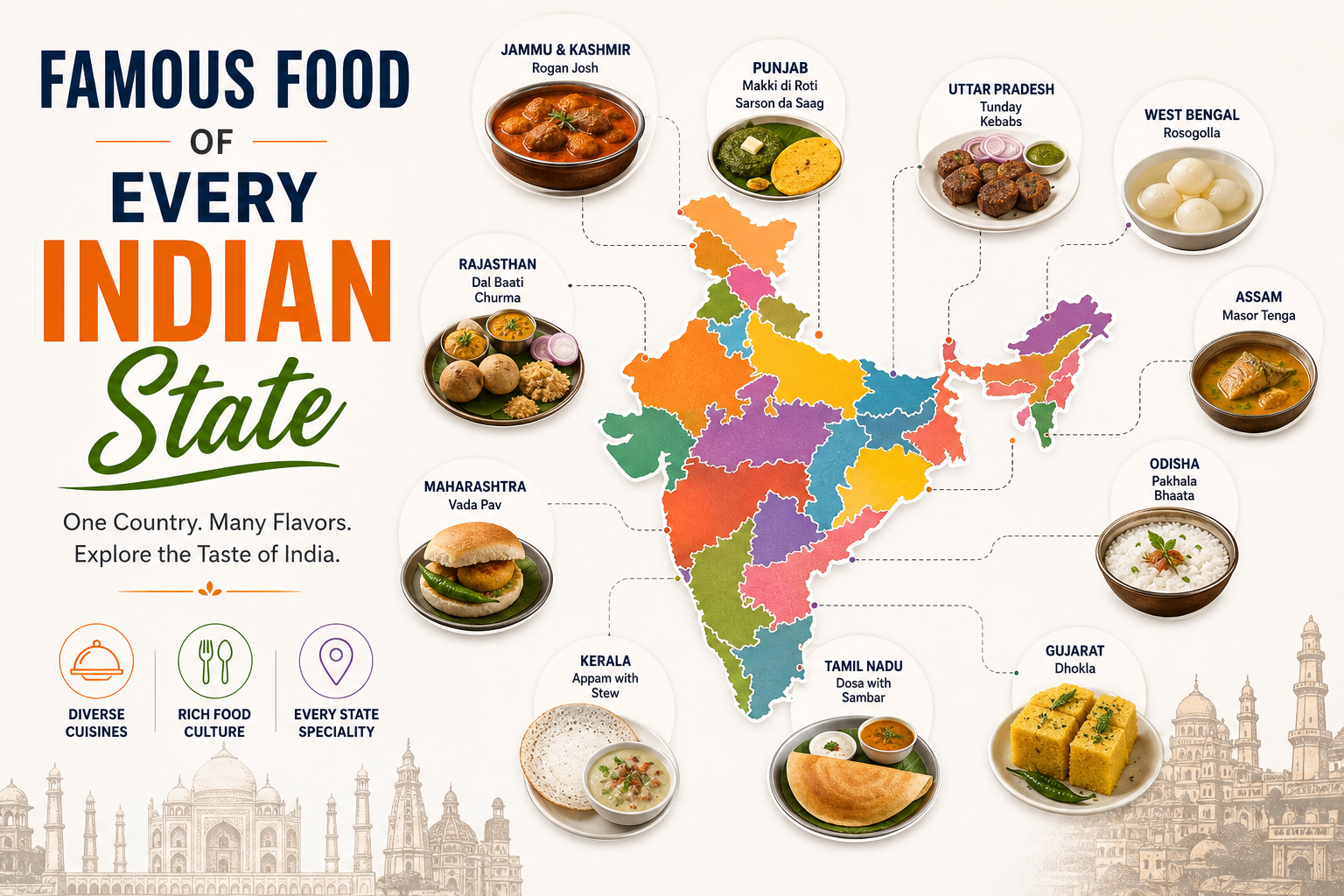
India is famous for its rich culture, colourful festivals, and incredible variety of food. Every state has its own traditional recipes, cooking styles, spices, and local ingredients that make its cuisine special. From the spicy curries of Rajasthan to the delicious fish dishes of West Bengal and the coconut-based delicacies of Kerala, traditional Indian food reflects the history and lifestyle of different regions.
If you want to discover the famous food of every Indian state, this guide covers all 28 Indian states and their popular traditional dishes. Whether you enjoy spicy street food, homemade meals, delicious sweets, or regional specialities, these foods offer a wonderful introduction to India's diverse culinary heritage.
Famous Food of Every Indian State: Complete List
The following table highlights well-known dishes associated with each Indian state. Many states have several regional specialities, so these dishes are examples rather than an exhaustive list of everything each state offers.
|
No. |
Indian State |
Famous Food |
Description |
|---|---|---|---|
|
1 |
Andhra Pradesh |
Gongura Pachadi and Pulihora |
Gongura pachadi is a tangy chutney made with sorrel leaves, while pulihora is a flavourful tamarind rice dish. |
|
2 |
Arunachal Pradesh |
Thukpa and Momos |
Thukpa is a warm noodle soup, and momos are steamed dumplings enjoyed in many Himalayan communities. |
|
3 |
Assam |
Assamese Fish Curry (Masor Tenga) |
A light, tangy fish curry traditionally prepared with sour ingredients and served with rice. |
|
4 |
Bihar |
Litti Chokha |
Roasted wheat-flour balls filled with spiced sattu, served with mashed vegetables such as brinjal, potato, or tomato. |
|
5 |
Chhattisgarh |
Chila and Faraa |
Chila is a savoury pancake, while faraa consists of steamed rice-flour dumplings. |
|
6 |
Goa |
Goan Fish Curry |
A coastal speciality often prepared with fish, coconut, chillies, and local spices. |
|
7 |
Gujarat |
Dhokla and Thepla |
Dhokla is a soft, savoury steamed snack, while thepla is a spiced flatbread often made with fenugreek leaves. |
|
8 |
Haryana |
Bajra Roti and Hara Saag |
A traditional combination of millet flatbread and seasonal green vegetables, commonly enjoyed with homemade butter or curd. |
|
9 |
Himachal Pradesh |
Dham |
A traditional festive meal featuring rice, lentils, and regional preparations served at celebrations. |
|
10 |
Jharkhand |
Dhuska and Chilka Roti |
Dhuska is a deep-fried rice-and-lentil snack, while chilka roti is a traditional pancake-like preparation. |
|
11 |
Karnataka |
Bisi Bele Bath and Mysore Masala Dosa |
Bisi bele bath combines rice, lentils, vegetables, and spices; Mysore masala dosa is a crisp dosa with a spicy filling. |
|
12 |
Kerala |
Appam with Stew |
Soft, lacy rice pancakes are served with a mildly spiced vegetable, chicken, or other regional stew. |
|
13 |
Madhya Pradesh |
Poha and Bhutte Ka Kees |
Poha is a popular flattened-rice breakfast, while bhutte ka kees is a grated corn dish associated with Indore. |
|
14 |
Maharashtra |
Vada Pav and Puran Poli |
Vada pav is a potato fritter served in a bread roll, while puran poli is a sweet flatbread filled with lentils and jaggery. |
|
15 |
Manipur |
Eromba |
A traditional dish made with boiled vegetables, fermented fish in many versions, and chillies. |
|
16 |
Meghalaya |
Jadoh |
A Khasi rice dish commonly cooked with meat and aromatic ingredients. |
|
17 |
Mizoram |
Bai |
A traditional preparation of vegetables and herbs, sometimes cooked with pork or other ingredients. |
|
18 |
Nagaland |
Smoked Pork with Bamboo Shoot |
A well-known Naga preparation combining smoked pork, bamboo shoot, and local seasonings. |
|
19 |
Odisha |
Dalma and Pakhala Bhata |
Dalma combines lentils and vegetables, while pakhala bhata is fermented or lightly soured rice traditionally eaten with accompaniments. |
|
20 |
Punjab |
Sarson Da Saag and Makki Di Roti |
Mustard greens are cooked into a rich preparation and served with maize flatbread, especially during winter. |
|
21 |
Rajasthan |
Dal Baati Churma |
Baked wheat dumplings are served with lentils and sweet, crumbly churma. |
|
22 |
Sikkim |
Momos and Thukpa |
Dumplings and noodle soup are popular foods influenced by the region's Himalayan culinary traditions. |
|
23 |
Tamil Nadu |
Pongal and Chettinad Chicken |
Pongal is a rice-and-lentil dish, while Chettinad chicken is known for its aromatic, spice-rich preparation. |
|
24 |
Telangana |
Hyderabadi Biryani |
A celebrated rice dish prepared with aromatic spices and meat or vegetables, associated with Hyderabad's culinary heritage. |
|
25 |
Tripura |
Mui Borok and Chakhwi |
Mui Borok refers to Tripura's traditional food culture, while chakhwi is a regional dish made with vegetables and other local ingredients. |
|
26 |
Uttar Pradesh |
Awadhi Biryani and Tunday Kebab |
Lucknow's Awadhi cuisine is known for fragrant biryani and finely spiced kebabs. |
|
27 |
Uttarakhand |
Kafuli and Aloo Ke Gutke |
Kafuli is a thick green-leaf preparation, while aloo ke gutke features spiced potatoes. |
|
28 |
West Bengal |
Macher Jhol and Rosogolla |
Macher jhol is a traditional fish curry, while rosogolla is a soft, syrup-soaked sweet. |
Famous Food in India: Exploring Regional Indian Cuisine
The famous dishes of Indian states are influenced by geography, climate, local agriculture, traditions, and community preferences. Understanding these differences makes exploring Indian food even more interesting.
1. North Indian Food
North India is known for rich gravies, wheat-based breads, lentils, dairy products, and aromatic spices. Many dishes are closely associated with festivals, winter meals, and traditional hospitality.
Some popular examples include:
Punjab: Sarson da saag, makki di roti, chole bhature.
Rajasthan: Dal baati churma, gatte ki sabzi, ker sangri.
Uttar Pradesh: Awadhi biryani, kebabs, bedai with aloo sabzi.
Himachal Pradesh: Dham, siddu, madra.
Uttarakhand: Kafuli, chainsoo, aloo ke gutke.
Haryana: Bajra roti, hara saag, kadhi.
These dishes showcase the region's combination of hearty meals, seasonal ingredients, and distinctive spice blends.
2. South Indian Food
South Indian cuisine is widely known for rice, lentils, coconut, curry leaves, tamarind, and fermented batters. Breakfast dishes such as dosa and idli are popular across India, although each state has its own specialities.
Popular dishes include:
-
Tamil Nadu: Pongal, idli, dosa, Chettinad chicken.
-
Kerala: Appam with stew, puttu and kadala curry, Kerala fish curry.
-
Karnataka: Bisi bele bath, Mysore masala dosa, ragi mudde.
-
Andhra Pradesh: Gongura pachadi, pulihora, spicy regional curries.
-
Telangana: Hyderabadi biryani, sarva pindi, sakinalu.
The region offers everything from simple everyday meals to elaborate festive dishes.
3. East Indian Food
Eastern India features rice, fish, lentils, leafy vegetables, mustard oil, and a wide variety of sweets. Its food traditions differ considerably from one state to another.
Popular examples include:
-
West Bengal: Macher jhol, shorshe ilish, rosogolla.
-
Bihar: Litti chokha, sattu paratha, thekua.
-
Jharkhand: Dhuska, chilka roti, traditional rice preparations.
-
Odisha: Dalma, pakhala bhata, chhena poda.
-
Assam: Masor tenga, khar, pitha.
From tangy fish curries to traditional sweets, regional Indian cuisine in the east offers a variety of distinctive flavours.
4. West Indian Food
Western India is famous for its snacks, seafood, vegetarian dishes, millet-based meals, and sweet-and-savoury flavour combinations.
Some popular foods are:
-
Gujarat: Dhokla, thepla, undhiyu.
-
Maharashtra: Vada pav, misal pav, puran poli.
-
Goa: Goan fish curry, xacuti, bebinca.
-
Rajasthan: Dal baati churma, mirchi vada, ghevar.
-
Madhya Pradesh: Poha, bhutte ka kees, Indori namkeen.
The region's food culture ranges from quick street snacks to elaborate festive meals.
5. Northeast Indian Food
Northeast India has diverse culinary traditions shaped by local vegetables, rice, herbs, fermented ingredients, bamboo shoots, and regional cooking techniques. Ingredients and recipes vary between communities.
Popular examples include:
-
Arunachal Pradesh: Thukpa, momos, local meat and vegetable preparations.
-
Manipur: Eromba, kangshoi.
-
Meghalaya: Jadoh, dohneiiong.
-
Mizoram: Bai, sawhchiar.
-
Nagaland: Smoked pork with bamboo shoot, axone-based dishes.
-
Sikkim: Momos, thukpa, gundruk preparations.
-
Tripura: Mui borok, chakhwi.
These dishes are an important part of the region's food heritage and are worth exploring to understand the diversity of Indian cooking.
Famous Street Food in India
Indian street food is loved for its bold flavours, affordability, and variety. From crispy snacks to spicy chaat and stuffed breads, street food is an essential part of the country's culinary culture.
|
City or Region |
Famous Street Food |
What Makes It Special |
|---|---|---|
|
Delhi |
Chole Bhature |
Fluffy fried bread served with spicy chickpea curry. |
|
Mumbai, Maharashtra |
Vada Pav |
A potato fritter in a bread roll with chutneys. |
|
Indore, Madhya Pradesh |
Poha and Jalebi |
A popular breakfast combination of savoury flattened rice and sweet jalebi. |
|
Kolkata, West Bengal |
Kathi Roll |
A flatbread wrap filled with spiced ingredients. |
|
Lucknow, Uttar Pradesh |
Tunday Kebab |
A celebrated kebab known for its tender texture and aromatic spices. |
|
Ahmedabad, Gujarat |
Dhokla |
A soft, savoury steamed snack. |
|
Hyderabad, Telangana |
Hyderabadi Biryani |
A flavourful rice dish associated with the city's food culture. |
|
Chennai, Tamil Nadu |
Masala Dosa |
A crisp dosa filled with spiced potatoes and served with chutneys. |
|
Goa |
Goan Chorizo Pao |
Bread served with a spicy Goan sausage preparation. |
|
Patna, Bihar |
Litti Chokha |
A traditional roasted dish enjoyed as a filling meal or snack. |
Tip: When trying street food, choose vendors with good hygiene practices, freshly prepared food, and safe drinking water.
Famous Indian Sweets You Must Try
Indian sweets are closely connected with celebrations, religious festivals, weddings, and family traditions. Many sweets are strongly associated with particular regions, although they are now available throughout the country.
|
Sweet |
Region Commonly Associated With It |
Description |
|---|---|---|
|
Rosogolla |
West Bengal and Odisha |
Soft balls made from chhena, cooked in sugar syrup. |
|
Ghevar |
Rajasthan |
A disc-shaped sweet traditionally associated with festivals such as Teej. |
|
Mysore Pak |
Karnataka |
A rich sweet made primarily with gram flour, ghee, and sugar. |
|
Petha |
Agra, Uttar Pradesh |
A translucent sweet traditionally made from ash gourd. |
|
Thekua |
Bihar and Jharkhand |
A deep-fried sweet snack commonly prepared for Chhath celebrations. |
|
Chhena Poda |
Odisha |
A baked chhena dessert with a caramelised exterior. |
|
Modak |
Maharashtra and other regions |
A dumpling-shaped sweet filled with coconut and jaggery in many versions. |
|
Payasam |
Kerala and South India |
A sweet pudding made with ingredients such as rice, vermicelli, milk, or coconut milk. |
|
Sandesh |
West Bengal |
A traditional sweet made with fresh chhena and sugar. |
|
Bal Mithai |
Uttarakhand |
A brown, fudge-like sweet coated with small white sugar balls. |
If you enjoy desserts, exploring famous Indian sweets is an excellent way to discover regional traditions beyond the main course.
Why Is Traditional Indian Food So Diverse?
The variety of traditional Indian food comes from the country's geography, agriculture, climate, history, and cultural practices.
Different Climates and Ingredients
Coastal states often use fish, coconut, and rice, while many northern regions rely on wheat, dairy products, lentils, and seasonal vegetables. Mountainous areas use locally available grains, herbs, and preserved foods.
Regional Spices and Cooking Techniques
Indian cuisine includes roasting, steaming, fermenting, slow cooking, grilling, and frying. Ingredients such as mustard seeds, curry leaves, cardamom, cumin, and chillies are used differently across regions.
Festivals and Cultural Traditions
Many dishes are associated with special occasions. Pongal is celebrated in Tamil Nadu, while litti chokha, thekua, and other traditional foods have important places in different regional food cultures.
Vegetarian and Non-Vegetarian Traditions
India has a wide range of vegetarian and non-vegetarian dishes. Some communities favour plant-based meals, while others have rich traditions involving fish, chicken, pork, lamb, and other meats.
This diversity makes famous food in India much more than a list of popular recipes. It represents regional identity, local ingredients, and generations of culinary knowledge.
Tips for Exploring India's Regional Food
If you want to try different Indian cuisines, a little planning can help you enjoy a better food experience.
-
Try local specialities: Ask residents which dishes are particularly associated with the area.
-
Visit reputable local eateries: Traditional restaurants and established food stalls can introduce you to regional recipes.
-
Explore seasonal dishes: Some foods are prepared mainly during specific seasons or festivals.
-
Check ingredients: Ask about allergens, meat, dairy, and other ingredients if you have dietary requirements.
-
Choose food carefully: Prefer freshly prepared meals and hygienic food-handling practices.
-
Respect local food traditions: Different communities may have their own ways of preparing and serving traditional dishes.
-
Explore beyond famous dishes: Regional snacks, breads, pickles, chutneys, and desserts can be just as interesting as main courses.
Conclusion
The famous food of every Indian state reflects India's extraordinary culinary diversity. From litti chokha in Bihar and dal baati churma in Rajasthan to appam with stew in Kerala and macher jhol in West Bengal, every region offers dishes with their own ingredients, flavours, and cultural significance.
Exploring famous dishes of Indian states is a wonderful way to learn about local traditions and discover new flavours. Whether you enjoy traditional home-cooked meals, regional sweets, or famous street food in India, there is always something new to try.
The next time you explore Indian cuisine, go beyond familiar dishes and discover the unique food traditions of all 28 states.