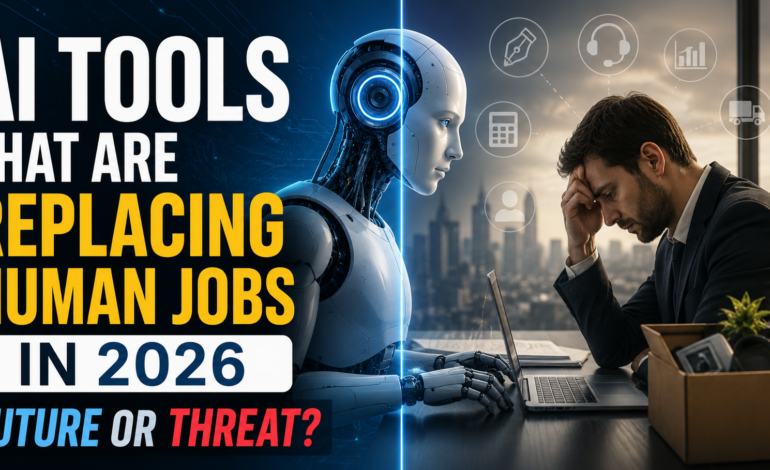
AI Tools That Are Replacing Human Jobs in 2026: Future or Threat?

Artificial Intelligence is no longer just a futuristic idea. In 2026, AI is becoming a major part of daily business operations, content creation, customer support, software development, healthcare, and even creative industries. The rise of advanced AI platforms has completely changed how companies work, helping businesses save time, reduce costs, and increase productivity. But with these advantages comes one big concern — are AI tools replacing human jobs permanently?
The discussion around AI Tools That Are Replacing Human Jobs In 2026 is growing rapidly because automation is now affecting both small businesses and large enterprises. From AI chatbots handling customer service to AI-powered software generating videos, writing articles, and designing graphics, many traditional job roles are evolving faster than expected.
Why AI Tools Are Growing So Fast in 2026
The main reason behind the rapid growth of AI is efficiency. Businesses want faster results with lower operational costs. AI tools can work 24/7 without breaks, analyze huge amounts of data within seconds, and automate repetitive tasks that previously required human workers.
Modern AI systems are also becoming smarter with advanced reasoning capabilities, voice interaction, image generation, coding support, and business automation. Companies across industries are now using AI to improve workflow management, reduce human error, and increase overall performance.
In 2026, AI will not only help tech companies. Industries like healthcare, finance, manufacturing, education, logistics, digital marketing, and e-commerce are heavily investing in AI-powered automation systems.
AI Tools That Are Replacing Human Jobs In 2026
Several AI tools are already changing the job market dramatically. Here are some of the most impactful categories:
AI Content Writing Tools
AI writing assistants can now create blog posts, product descriptions, ad copies, emails, scripts, and SEO content within minutes. Many businesses are reducing dependency on large content teams because AI tools can generate high-quality drafts quickly.
Content creators still play an important role, but their work is shifting more toward editing, strategy, fact-checking, and human storytelling rather than basic writing tasks.
AI Customer Support Chatbots
Customer support departments are rapidly adopting AI chatbots that can answer customer queries instantly. These bots can manage order tracking, FAQs, technical troubleshooting, and appointment booking without human intervention.
Many businesses now use AI support systems to handle thousands of conversations simultaneously, reducing the need for large customer service teams.
AI Graphic Design Platforms
AI-powered design tools can generate logos, social media posts, banners, presentations, and marketing creatives automatically. Small businesses no longer need to hire full-time graphic designers for basic tasks.
However, professional designers are still valuable for creative branding strategies and unique visual concepts that require human creativity.
AI Video Editing and Creation Tools
AI video generators are becoming highly advanced in 2026. They can create promotional videos, subtitles, voiceovers, animations, and even realistic AI avatars automatically.
This technology is transforming the content marketing industry and reducing manual editing workloads significantly.
AI Coding Assistants
Software development has changed massively with AI coding tools. Developers now use AI for code generation, debugging, testing, and documentation. Many repetitive coding tasks can now be completed within seconds.
Instead of replacing developers completely, AI is helping programmers become faster and more productive.
Which Jobs Are Most Affected by AI?
Some industries are seeing bigger changes than others. Jobs that involve repetitive, rule-based, or predictable tasks are more likely to be automated.
Highly Affected Job Categories
- Data Entry Operators
- Basic Customer Support Executives
- Telemarketing Staff
- Junior Content Writers
- Basic Graphic Designers
- Transcription Workers
- Simple Accounting Roles
- Repetitive Manufacturing Jobs
These roles are increasingly being supported or partially replaced by AI-powered systems.
Jobs That AI Cannot Fully Replace
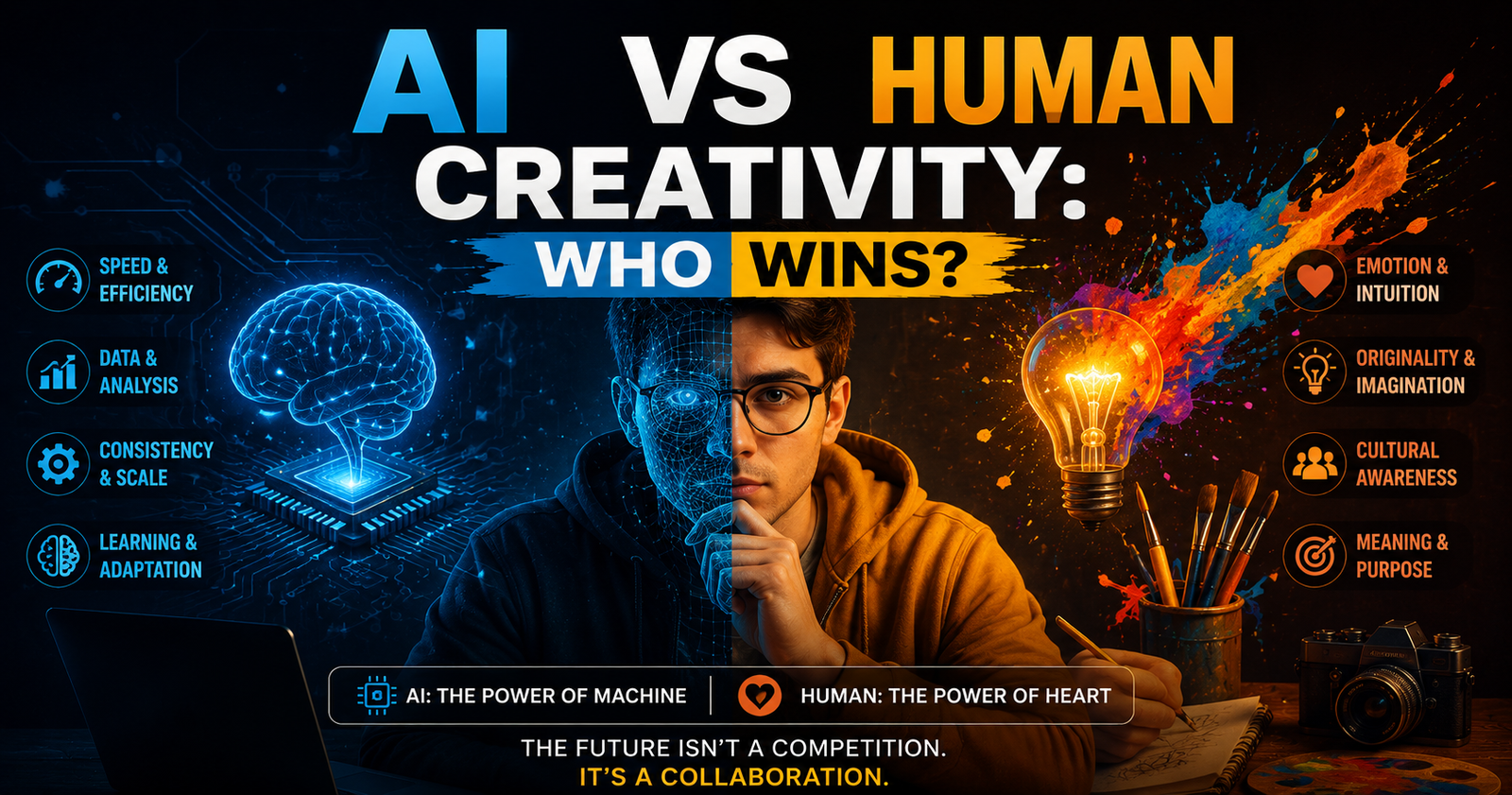
Even though AI is advancing rapidly, there are many areas where human skills remain extremely important. Human emotions, creativity, leadership, decision-making, and ethical understanding still cannot be fully replicated by machines.
Human Skills Still Matter
- Strategic Business Leadership
- Advanced Creative Direction
- Psychological Counseling
- Medical Decision Making
- Legal Judgment
- Human Relationship Management
- Innovation and Critical Thinking
AI can assist professionals in these industries, but complete replacement is still unlikely.
Advantages of AI in the Workplace
AI is not only about job replacement. It is also creating new opportunities and improving productivity.
Major Benefits of AI
- Faster workflow automation
- Improved accuracy
- Reduced operational costs
- Better customer experience
- Advanced data analysis
- Increased business scalability
- Support for small businesses and startups
Many companies are using AI to expand their services and create new digital business models.
The Dark Side of AI Automation
Despite its advantages, AI also creates concerns about unemployment and workforce imbalance. Many workers fear losing their jobs because businesses prefer automation over hiring large teams.
Another major concern is over-dependency on AI-generated content and decisions. Incorrect AI outputs, misinformation, privacy risks, and ethical issues are becoming serious discussions globally.
Governments and organizations are now focusing on AI regulations, ethical AI development, and workforce reskilling programs to balance technological growth with employment stability.
Will AI Create New Jobs?
History shows that every major technological revolution creates new industries. AI is expected to generate millions of new jobs related to:
- AI Management
- Prompt Engineering
- AI Content Supervision
- Automation Consulting
- AI Ethics and Compliance
- Machine Learning Operations
- AI Security and Monitoring
People who learn AI-related skills early may benefit greatly from future opportunities.
How Professionals Can Stay Safe in the AI Era
The best strategy is adaptation. Instead of competing directly against AI, professionals should learn how to work alongside AI systems.
Skills That Will Become More Valuable
- AI Tool Management
- Creative Thinking
- Communication Skills
- Personal Branding
- Strategic Problem Solving
- Digital Marketing
- Advanced Technical Skills
Continuous learning will become essential in the coming years.
Future of AI Beyond 2026
The AI revolution is still in its early stages. Future AI systems may become even more powerful with advanced reasoning, emotional intelligence simulation, robotics integration, and autonomous decision-making capabilities.
Companies are already investing billions into AI research and infrastructure. The next few years could completely redefine global work culture and digital business operations.
If you are interested in future technology innovations, you can also explore topics like iPhone 18 Leaks and Expected Features and OpenAI GPT-5.5 vs Anthropic Claude Opus 4.7 to understand how rapidly modern technology is evolving.
Conclusion
The rise of AI Tools That Are Replacing Human Jobs In 2026 is both an opportunity and a challenge. AI is transforming industries, improving efficiency, and changing how businesses operate worldwide. While some traditional jobs may decline, many new opportunities will also emerge for people willing to adapt and learn new skills.
Rather than viewing AI only as a threat, the smarter approach is to understand how AI works and use it as a tool for growth, productivity, and innovation. The future will likely belong to those who can combine human intelligence with artificial intelligence effectively.