
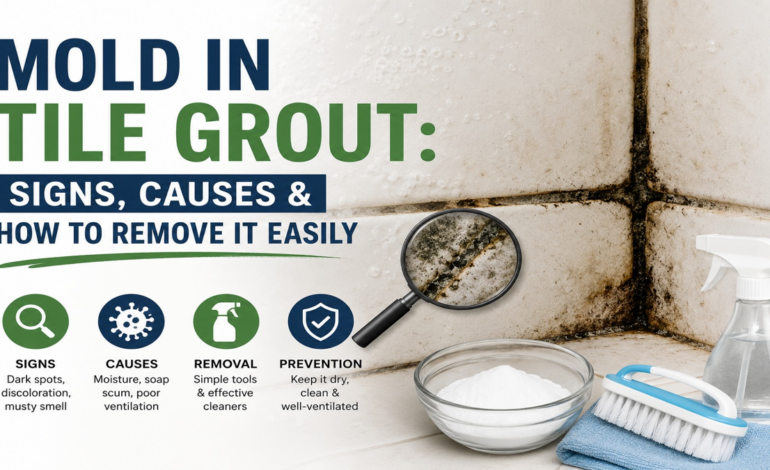
Mold in Tile Grout: Signs, Causes & How to Remove It Easily

Mold in tile grout may appear like a minor cosmetic issue at first, but in reality, it can gradually turn into a serious problem affecting both the cleanliness and overall environment of your home. Most people focus on cleaning tiles while ignoring the grout lines, yet these narrow joints are where moisture, dirt, and residue accumulate over time. This creates an ideal breeding ground for mold, allowing it to develop quietly and spread beneath the surface without immediate notice.
Grout is naturally porous, which means it absorbs water and contaminants easily. In moisture-prone areas such as bathrooms and kitchens, this characteristic becomes a major disadvantage. Continuous exposure to humidity, combined with soap scum and organic particles, accelerates the growth of mold in tile grout. What begins as faint discoloration can quickly evolve into stubborn dark patches that become increasingly difficult to remove if left untreated.
Understanding Mold Growth in Tile Grout
To deal with this issue effectively, it is important to understand how mold develops in the first place. Mold spores are always present in the air, but they only grow when they find the right conditions—primarily moisture, warmth, and a food source. Grout provides all three. Once mold takes hold, it penetrates deep into the porous structure, making surface cleaning insufficient in many cases.
This is why tile grout mold often reappears even after regular cleaning. The problem is not just on the surface; it exists within the material itself.
Common Signs of Mold in Tile Grout
Identifying mold early can save both time and effort. One of the most visible signs is the appearance of black or greenish spots along grout lines, often referred to as black mold in grout. These spots may initially seem harmless, but they tend to spread rapidly if ignored.
Another clear indication is a persistent musty or damp smell, especially in enclosed spaces like bathrooms. Even after cleaning, if the odor lingers, it suggests that mold is embedded within the grout. Discoloration is another warning sign. Grout that turns yellow, brown, or uneven in shade is often experiencing underlying mold growth rather than simple dirt accumulation.
In some cases, people also notice that stains keep returning despite repeated cleaning. This usually indicates that the mold has penetrated deeper layers of the grout. Additionally, prolonged mold exposure may lead to mild health symptoms such as allergies, irritation, or breathing discomfort, particularly in poorly ventilated areas.
Primary Causes Behind Mold Formation
The most significant factor behind mold growth is excess moisture. Bathrooms, where steam and water exposure are constant, are especially vulnerable. Without proper ventilation, moisture remains trapped, allowing mold to thrive.
Poor airflow further intensifies the issue. When humid air is not circulated or removed, grout remains damp for extended periods. Over time, soap residue, dirt, and organic particles accumulate within the grout lines, providing nutrients that encourage mold development.
Hidden leaks are another common cause. Even a minor leak behind tiles or under surfaces can continuously feed moisture into the grout, making it nearly impossible to control mold growth without addressing the source. Infrequent cleaning also plays a role, as it allows mold spores to settle and multiply undisturbed.
Effective Methods to Remove Mold from Tile Grout
Removing mold requires a method that not only cleans the surface but also targets the deeper layers where mold resides. For mild cases, natural cleaning solutions can be highly effective. A mixture of baking soda and vinegar creates a reaction that helps break down mold and lift it from the grout. This approach is safe for regular use and works well for early-stage grout mold signs.
For more persistent mold, hydrogen peroxide offers a stronger solution. It penetrates the grout and kills mold spores at their root, reducing the chances of regrowth. In more difficult situations where bathroom mold in grout has spread significantly, a diluted bleach solution may be used. While bleach is effective against stubborn mold, it should be applied carefully, as excessive use can weaken the grout over time.
Commercial grout cleaners are also available and are specifically designed for deep cleaning and mold removal. These products are useful when natural methods do not deliver the desired results.
Preventing Mold from Returning
Eliminating mold is only part of the solution; preventing its return is equally important. Moisture control is the most critical factor in prevention. After using the bathroom or kitchen, drying the tiles and grout can significantly reduce the chances of mold growth.
Improving ventilation is another essential step. Using exhaust fans or ensuring proper airflow helps remove excess humidity from the space. Regular cleaning should not be overlooked, as it prevents the buildup of dirt and residue that feeds mold.
Applying a grout sealer is a highly effective preventive measure. Sealers create a protective barrier that limits moisture absorption, making it harder for mold to develop. Additionally, any leaks or seepage issues should be addressed immediately to prevent continuous moisture exposure.
Health and Structural Impact of Mold
Although mold in grout may seem limited to surface damage, its impact can extend beyond appearance. Continuous exposure to mold spores can affect indoor air quality and may lead to respiratory issues, allergies, or skin irritation. This is particularly concerning in confined areas like bathrooms, where airflow is often limited.
From a structural perspective, prolonged mold growth can weaken grout and, in severe cases, affect the stability of tiles. Over time, this may lead to costly repairs if not addressed promptly.
When Professional Help Becomes Necessary
In some situations, mold growth becomes too extensive for standard cleaning methods. If mold continues to return despite repeated efforts, covers a large area, or produces a strong, persistent odor, professional intervention may be required. Experts use specialized equipment and techniques to remove mold from deep within the grout and restore the affected surfaces effectively.
Final Thoughts
Mold in tile grout is a common yet often underestimated problem. What starts as a minor discoloration can quickly escalate into a persistent and difficult-to-manage issue if neglected. Recognizing the early signs, understanding the underlying causes, and taking timely action are essential steps in maintaining a clean and healthy environment.
By combining proper cleaning methods with preventive measures such as ventilation, moisture control, and sealing, it is possible to keep grout lines free from mold for the long term. A proactive approach not only preserves the appearance of tiled surfaces but also contributes to a safer and more comfortable living space.
Frequently Asked Questions (FAQs)
1. What causes mold in tile grout?
Mold in tile grout mainly develops due to excess moisture, poor ventilation, and dirt buildup. Bathrooms and kitchens are especially prone to mold because grout absorbs water easily, creating the perfect environment for mold growth.
2. Is mold in tile grout dangerous?
Yes, mold can affect indoor air quality and may lead to allergies, respiratory issues, or irritation. Prolonged exposure, especially in closed spaces like bathrooms, can create health concerns if not treated in time.
3. How can I remove mold from tile grout at home?
You can remove mold using simple methods like baking soda and vinegar, hydrogen peroxide, or a mild bleach solution. For light mold, natural solutions work well, while stubborn stains may require stronger cleaning.
4. Why does mold keep coming back in grout?
Mold returns when the root cause—usually moisture—is not fixed. Poor ventilation, leaks, or damp surfaces allow mold to regrow even after cleaning.
5. How do I prevent mold in tile grout?
To prevent mold, keep the area dry, improve ventilation, clean regularly, and apply a grout sealer. These steps reduce moisture and stop mold from forming.
6. Can I permanently remove mold from grout?
Mild mold can be removed completely, but in severe cases where mold has penetrated deep into grout, professional cleaning or regrouting may be required for a permanent solution.
Read the full article here: DreamCloud Queen Mattress Deal with Free Bedding: A Smarter Way to Upgrade Your Sleep